
Frankly Speaking: CX Truths
A 123-Year-Old Bookstore Just Taught Me How to Survive AI
It banned computers, made you queue three times, and outlived the company everyone said would kill it.
Umesh Jain · 21 July 2026
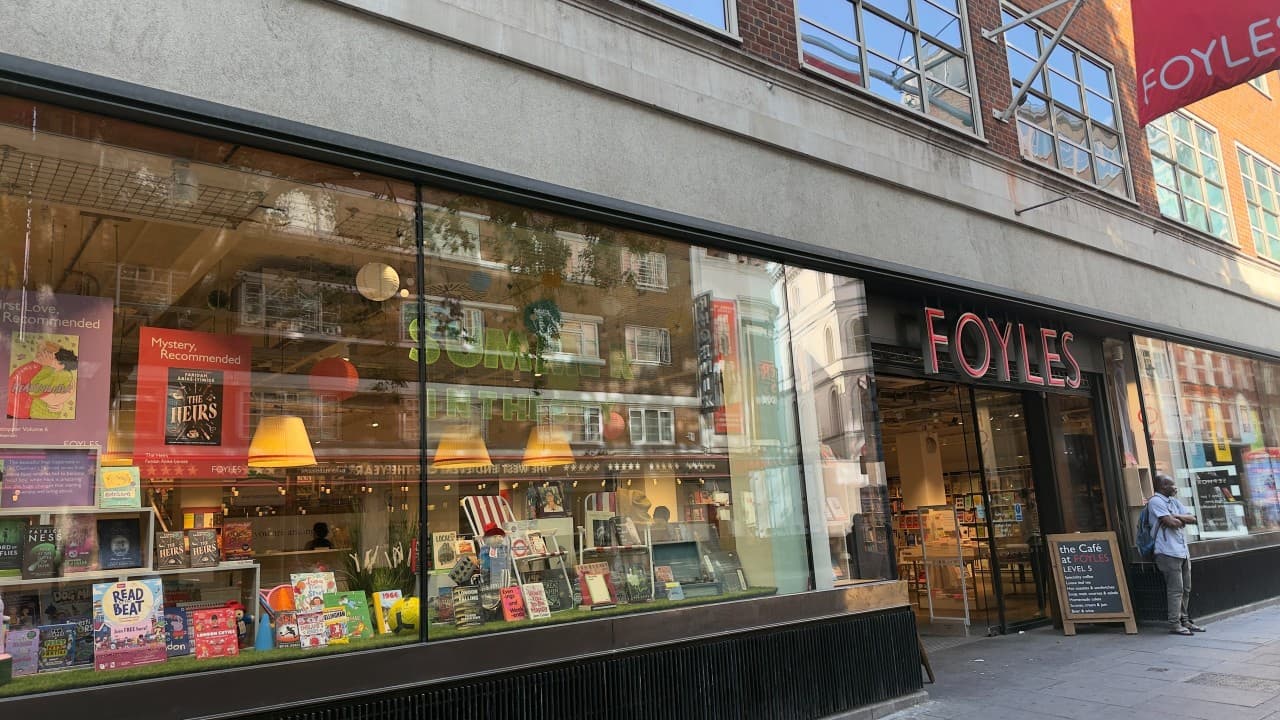
There's a place like this in your life. You know the one.
Maybe it's a bookstore, or the record shop where you flipped through crates of vinyl for hours, or the coffee shop that knew your order before you reached the counter. It was never the fast option or the cheap one, but you went anyway, because walking in felt like coming home. Mine is a bookstore in London called Foyles, and I found it thirty years ago as a broke computer engineering student at King's College. I've gone back on nearly every trip to London since, and standing there last week I felt the quiet fear a lot of us feel now in these places: how is this still here?
Because so many of them aren't. The record store closed, the coffee shop became a bank branch, and the bookstore you grew up in sells phone cases now. Amazon came, and one by one the places we loved for being slow and human got flattened by something faster and cheaper. Borders is gone, and thousands of independent bookshops are gone with it.
But Foyles is still standing, and when you know its history that borders on impossible. It opened in 1903 and was run for most of that time in a way that should have buried it: computers were banned, books were shelved by publisher instead of author so you couldn't find anything on your own, and buying a single book meant queuing three separate times. It became a tourist attraction for being infuriating. Then the internet arrived and Amazon set about doing to bookshops what it later did to half of retail, and Foyles not only survived but modernized, earned a Guinness World Record for its shelving, and in 2018 was bought by Waterstones and kept growing.
I've spent 25 years fixing customer operations, and I'm now watching CX leaders face their own version of that moment, except it's called AI. So I went looking for how a 123-year-old bookshop outlived the company that was supposed to kill it, and the parallels were too close to ignore. Foyles didn't survive by fighting the technology, and it didn't survive on nostalgia either, because a fond memory doesn't pay the rent. It survived because it got ruthless about two things at once: modernizing everything the customer never sees, and doubling down on everything a screen can't do. That is the entire playbook for AI in customer experience.
1. Sell the discovery, not the transaction.
Amazon won the transaction, because you know the title, you click, and it shows up tomorrow.
Foyles never tried to win that race, since it couldn't, so it leaned into the one thing Amazon couldn't ship in a box: the treasure hunt of a floor designed so you'd stumble onto the book you didn't know you wanted.
AI plays the role of Amazon in your business, and it's very good at the transaction, whether that's a password reset, a tracking number, or a balance check. Put your people there to compete on speed and you'll lose, so the move instead is to place them where discovery happens, the same way Foyles did. Take home services as an example: when a customer calls about a broken AC, AI can pull the age of the equipment before anyone is dispatched, but it's the human technician who walks the house and says, "Given this neighborhood and this system, here's what's going to fail next." That isn't an upsell. It's the moment the customer remembers, and it's exactly the kind of thing an algorithm can't manufacture.
2. Protect the human premium.
Foyles also kept expert staff on every floor, people who knew the subject and not just where the inventory sat, and that expertise was the reason to make the trip. The same principle protects you now, so stop treating every human interaction as a cost to be eliminated, because some of them are your highest-value asset. Let AI absorb the volume, and your best people are freed to own the moments that carry real stakes.
You can see how this plays out in a dental practice, where a bot can book the cleaning and send the reminder all day long, but the moment a patient calls in pain, or scared, or asking about a procedure they can't afford, that has to be a human. A trained care coordinator rather than a script. Route the emotion to a person every time, and let the machine handle the routine.
3. Build a hub of specialists, not a wall of generalists.
When Foyles rebuilt, it could have become a cold big-box store, but instead it structured itself as a collection of specialty shops under one roof, even absorbing the feminist bookshop Silver Moon and a jazz record shop and letting each keep its own identity and experts. You can build your operation the same way, and you'll need to, because AI will flatten everything toward one generic script if you let it. The answer is to use it to clear the administrative work first, then organize your remaining people into small teams of deep specialists.
A personal injury firm is a good illustration of this, since no accident victim should feel like a case number in a mill. Let AI draft the initial case summary from the medical bills and the police report, and use the time that frees up to make sure the stressed client reaches a human who specializes in their particular kind of crisis rather than whoever happened to pick up.
4. Your legacy is a moat AI can't cross.
This is where Foyles holds an advantage no technology can copy. AI can clone a voice and write a polite email, but it cannot have a real history with your customer, and Foyles has 123 years of history, from its literary luncheons to its folklore to relationships with authors that no algorithm can manufacture. You have your own version of that moat in your history, your local reputation, and your values, and you're probably burying it. When AI handles a routine touch, make sure it still sounds like you rather than like everyone else, and when a milestone genuinely matters, such as a settlement or a major decision, put a human on the phone. That isn't inefficiency. It's the brand showing up.
5. Modernize the back-end ruthlessly, or none of this works.
The final lesson is the one people skip, because Foyles' comeback wasn't only charm. It rested on a brutal operational overhaul, with real inventory systems, real data, electronic tills, and actual staff training, and the romance the customer felt up front was funded entirely by that machinery in the back. The same rule holds for you, because you cannot deliver a great human experience on top of broken, disconnected systems. If your agent is hunting across five screens while a frantic customer waits, no amount of empathy training will save the call.
So modernize the plumbing, unify your customer data, and put AI to work where it belongs, surfacing the account history, the warranty status, and the next best step, so your agent can look up from the screen and say, "I see the technician is fifteen minutes out, and he has your part on the truck." The customer never sees the AI at all. They simply feel like you had it together.
That is the whole lesson from a 123-year-old bookstore. Foyles didn't win by being the most efficient, because Amazon already owns efficient. It won by being clear-eyed about exactly what efficiency couldn't replace, and then protecting that relentlessly while quietly modernizing everything behind the curtain. AI isn't the threat to your customer experience. Using it to erase the reason people chose you in the first place is the real threat.
So think about your own place, the bookstore or the record shop or the coffee shop that somehow made it, and then go find where the human matters in your operation and defend it the way Foyles defended its floors.
Foyles (W&G Foyle Ltd), thank you for thirty years of Saturdays. And Waterstones, thank you for keeping the doors open.
What’s your take? Tell me on LinkedIn. I read every comment.

New editions every two weeks. Subscribe on LinkedIn.