
How it works
A staffing firm sends you people, a software vendor sends you a tool, and an analytics consultancy sends you a dashboard, and each of them hands you the integration problem along with the invoice. We do all three, because in these two industries none of the three works without the other two, and because we spent twenty years building the data, AI and machine learning capability that makes running all three at once possible.
Layer one
Two dedicated practices, one Dental and one Personal Injury. Not a shared agent pool with two scripts, and not a generic customer service agent learning your vertical at your cost. Our Certified Intaker program trains and certifies people on domain knowledge before anyone is assigned to your account, so onboarding you means upskilling a certified team on your systems rather than starting a hiring cycle. Native bilingual, across phone and chat. We supplement your front desk rather than replacing it.
Layer two
Live agents 7am to 9pm Eastern, seven days a week. Ninety-eight hours, including the Saturday morning emergency and the Sunday afternoon accident. AI Voice covers the rest with access to your systems: it books, it qualifies, it captures, and it does not take messages. Every one of those calls is scored, and an agent who knows your account works that queue each morning. During center hours a caller who needs a person is transferred to one, live.
Layer three
We are not in the business of configuring your phone system. We take what happens in the conversation, together with what sits in your case or practice management system, your ad platforms and your call tracking, and we turn it into the next action rather than another report, because the two things a client cannot get anywhere else are a single view across those systems and somebody accountable for acting on it. Which lead to call now, which patient is overdue, which campaign produced signed cases, and which leads arrived and were never reached.
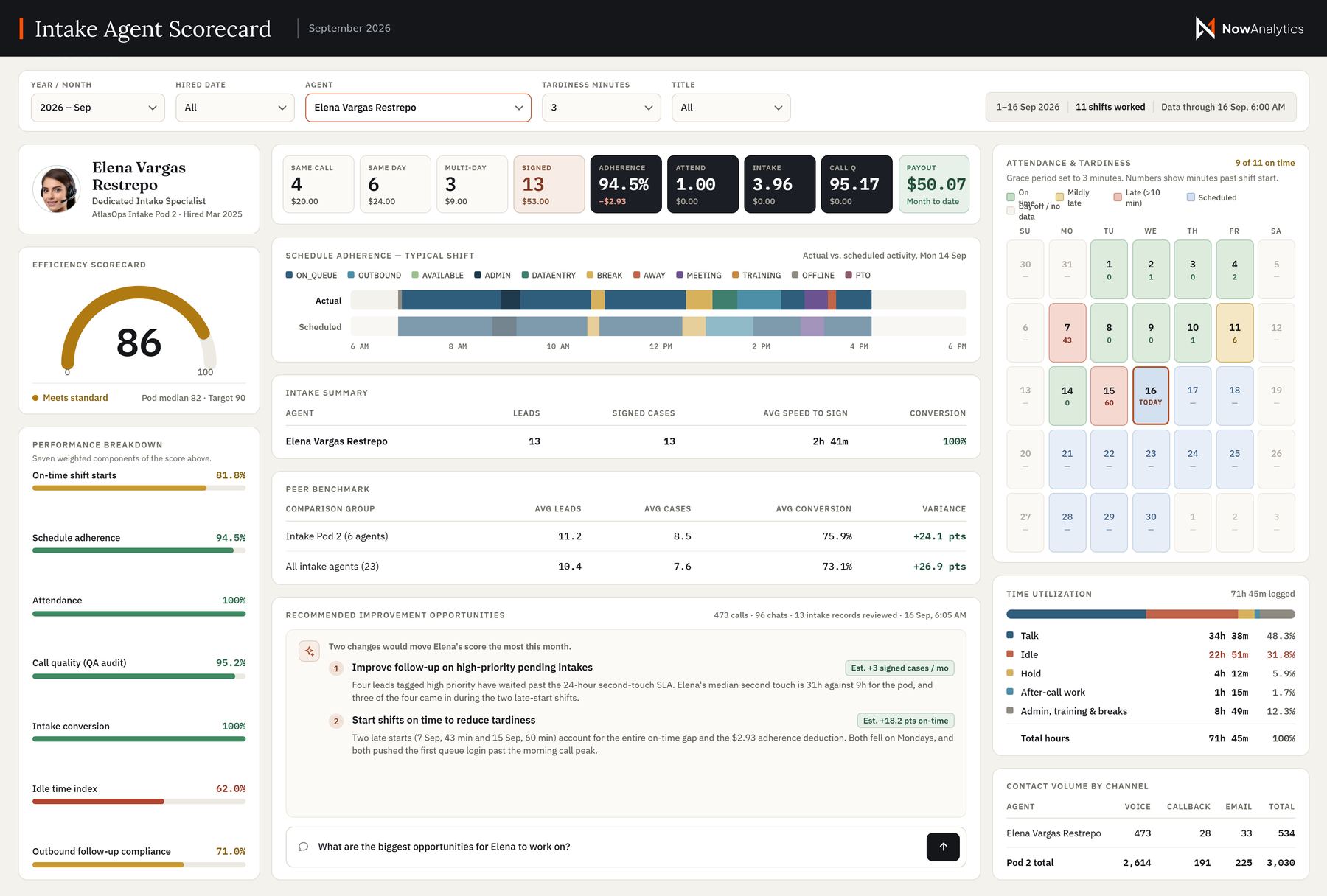
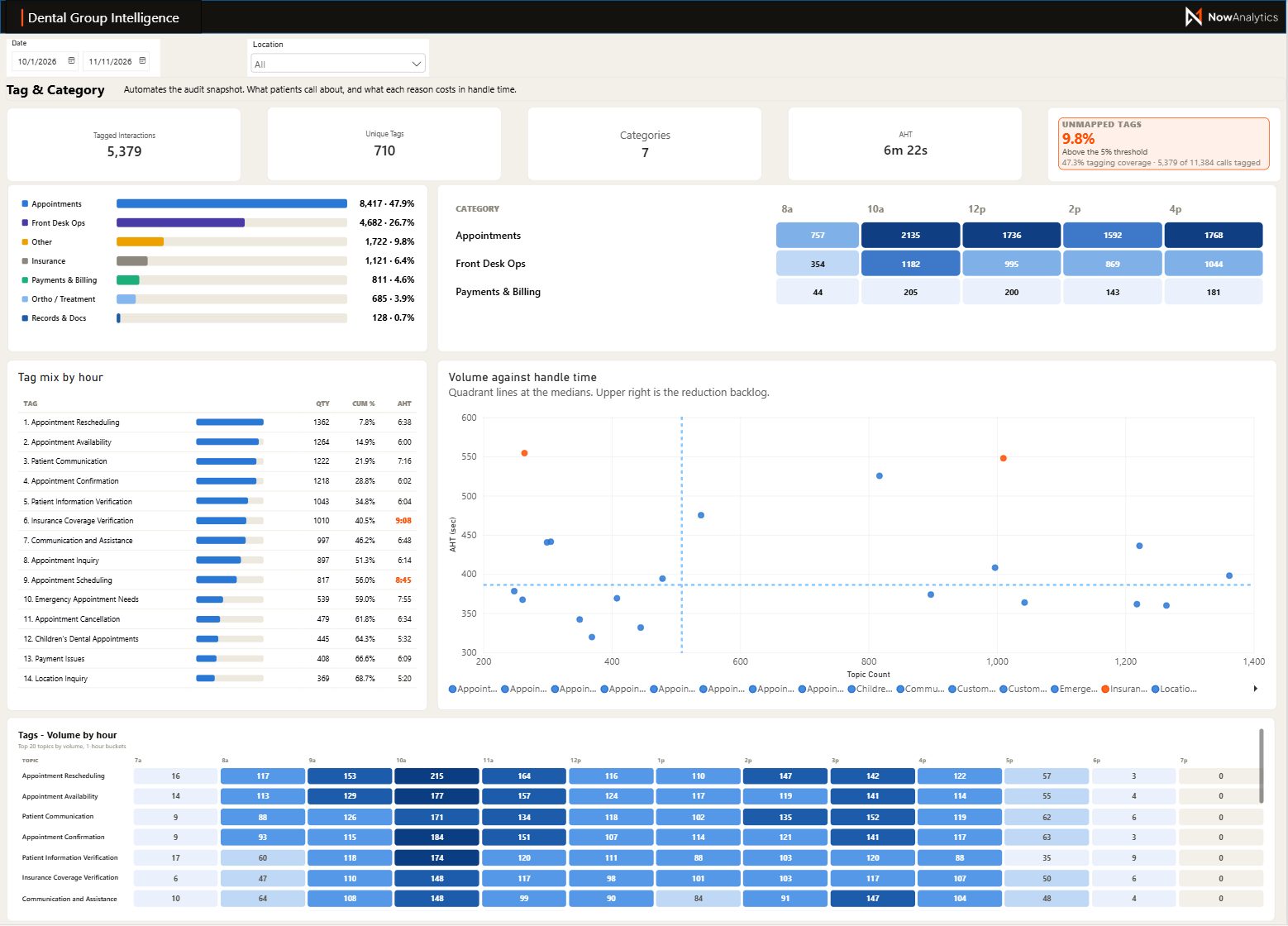
People where the volume concentrates. AI where it's thin and evenly spread. That isn't a compromise. It's how a contact center is supposed to be run.
Peaks need people, because that's where the queue forms and where a caller with a real problem gives up. Overnight is thin and scattered, and a night shift doesn't pay for itself with night calls. It raises the cost of every call you take at two in the afternoon.
If your arrival data says you need people on a Saturday, we'll put people on a Saturday. That's a math conversation, not a policy.
We look at your numbers together. Volume, arrival pattern, conversion, spend. If the recoverable amount is small, we'll say so.
Which calls, which hours, which systems. Your IT lead gets the architecture before anyone talks about price.
About two weeks. Usually overflow, evenings and weekends first, so nothing changes in your existing operation.
Thirty days. Already certified in your industry, now upskilled on your systems and protocols.
The weekly numbers start. You review actual calls, not a summary of them.
Once there's real arrival data, where people belong answers itself. Sometimes the answer is nothing more.
Send us ninety days of call records and we will hand back your contact rate by hour, your abandonment by location, and what the unanswered volume is worth. Five business days, no obligation.